



News
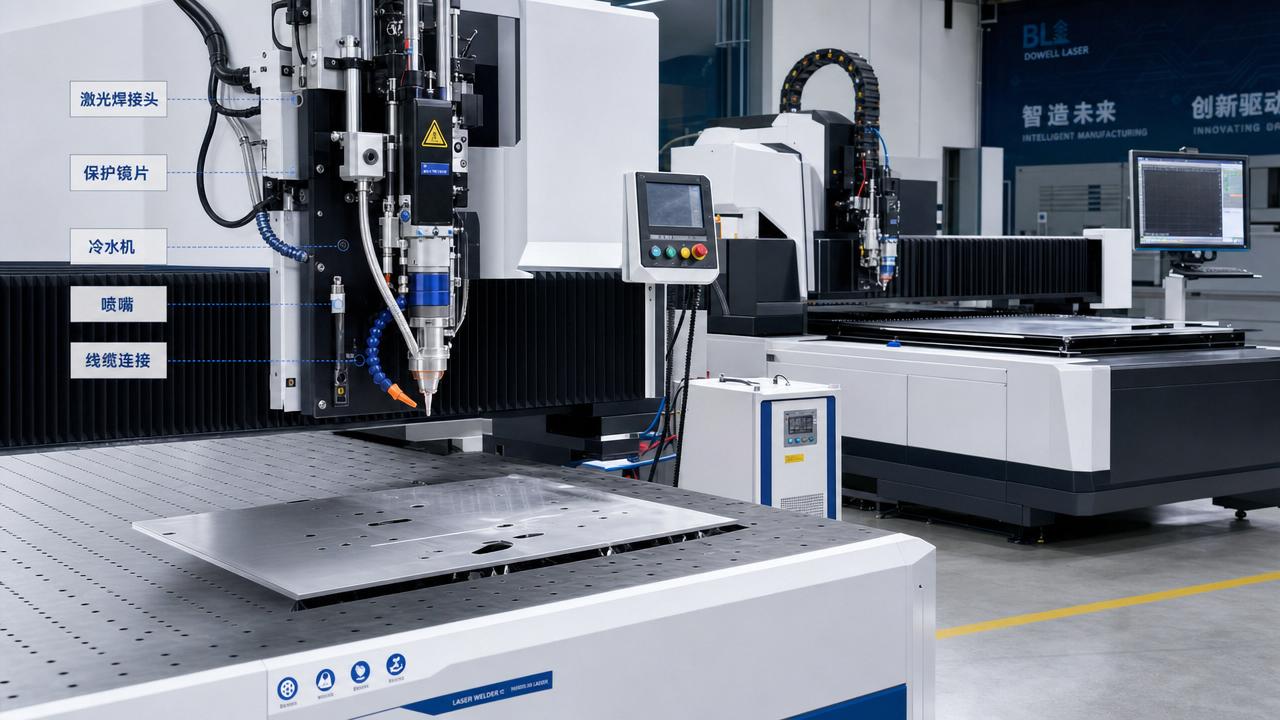
Laser Welding Machines deliver speed, precision, and consistent weld quality, but their long-term performance depends on proper maintenance. For after-sales maintenance personnel, understanding the points that matter most—from optics cleaning and cooling system checks to power stability and component inspection—is essential to reducing downtime and extending machine life. This guide highlights the key maintenance practices that help keep Laser Welding Machines operating safely, efficiently, and reliably.
In sheet metal fabrication and laser cutting machine workshops, welding units often work alongside cutting, positioning, and automated handling systems. That means maintenance is not only about fixing faults after they appear. It is about protecting beam quality, keeping motion accuracy stable within normal operating tolerance, and preventing small issues from turning into 4-hour or 8-hour production stops.
For after-sales maintenance teams, the most valuable approach is a structured routine: daily inspection, weekly cleaning, monthly verification, and quarterly preventive replacement of wear parts where needed. When Laser Welding Machines are maintained with discipline, service calls become more predictable, spare-parts planning improves, and field troubleshooting becomes faster.
Core Maintenance Areas That Directly Affect Welding Stability
The maintenance priorities for Laser Welding Machines usually fall into 5 core systems: optics, cooling, power supply, motion and wire-feed components, and safety protection. If one of these systems drifts outside its normal range, weld consistency, penetration depth, and seam appearance can change within a single production shift.
Optics: the first point to inspect
Protective lenses, focusing lenses, and nozzle assemblies should be checked first when spatter increases or weld points become unstable. In many laser cutting machine environments, airborne dust and metallic particles settle quickly. A contaminated protective lens can reduce transmitted energy, create hot spots, and shorten lens life from several weeks to just a few days.
A practical routine is visual inspection once per shift, surface cleaning every 24 hours in dusty conditions, and replacement whenever burn marks, micro-cracks, or coating damage are visible. Cleaning should use lint-free swabs, approved optical cleaner, and a one-direction wiping method. Circular rubbing often spreads residue and increases the risk of scratches.
Common optics warning signs
- Visible smoke residue on the lens window
- Uneven weld bead width over a 100 mm test seam
- More than 10% fluctuation in penetration at stable parameters
- Nozzle spatter build-up after 1 to 2 shifts
Cooling system: temperature control protects source life
The chiller and water circuit are critical because fiber laser sources, welding heads, and some control modules depend on stable heat removal. In most industrial conditions, circulating water temperature is commonly kept within a narrow process range, often around 20°C to 25°C depending on the equipment design and ambient temperature.
Maintenance personnel should verify water level, conductivity requirements if specified by the manufacturer, filter condition, and hose connections at least once every 7 days. Flow alarms that appear only occasionally should not be ignored. Intermittent flow loss often points to early filter blockage, pump wear, or air trapped in the loop.
The table below summarizes practical inspection points that after-sales teams can use during routine service visits for Laser Welding Machines installed in laser cutting machine production lines.
The key takeaway is simple: optics and cooling need the most frequent attention, while power and mechanical systems require regular verification to prevent sudden shutdowns. In mixed cutting and welding workshops, contamination and temperature instability are usually the first two causes to eliminate.
Power quality and grounding: often overlooked, often expensive
Laser Welding Machines rely on stable electrical input. Repeated undervoltage, overvoltage, or poor grounding can trigger alarms, damage sensitive modules, and create inconsistent laser output. A voltage fluctuation beyond the machine's acceptable range, even for a few seconds, may interrupt welding and force a control reset.
Maintenance staff should inspect terminal blocks, cable insulation, cooling fans inside electrical cabinets, and ground connections during scheduled service. Dust inside the electrical cabinet should be removed at intervals of 2 to 4 weeks in heavy-use workshops, especially where laser cutting dust is present in the same production area.
Mechanical and consumable checks
Even when the laser source is stable, poor weld quality can come from worn contact parts, misaligned nozzles, loose connectors, or unstable wire feeding. If wire feed resistance rises, the bead can show intermittent build-up or lack of fusion. If nozzle centering shifts, shielding gas coverage drops and oxidation becomes more visible.
A useful service habit is to combine visual inspection with a short 3-step validation: dry-run wire feed, low-power beam test, and sample weld on standard material thickness. That takes 10 to 15 minutes but often prevents unnecessary replacement of expensive optical or electrical parts.
Building a Preventive Maintenance Routine for Field Service Teams
Preventive maintenance works best when it is standardized. For after-sales maintenance personnel supporting Laser Welding Machines in the laser cutting machine industry, the goal is not only to repair. The goal is to create a repeatable service rhythm that cuts emergency visits, improves first-time fix rate, and keeps customer production schedules on track.
A practical maintenance schedule
A strong schedule usually has 4 layers: per shift, weekly, monthly, and quarterly. Per-shift tasks focus on optics, nozzle condition, gas supply, and alarm review. Weekly tasks add filter cleaning, connector checks, and chiller inspection. Monthly work includes cabinet cleaning, grounding verification, and parameter record comparison. Quarterly work can include preventive replacement of high-wear consumables.
This approach gives service teams measurable checkpoints. If beam quality drift appears in month 2, the team can compare logs from the previous 30 to 60 days instead of guessing. Over time, this reduces troubleshooting hours and helps identify site-specific risks such as unstable shop power or excessive cutting dust near the welding cell.
Recommended service checklist structure
- Record machine status, alarm history, and operating hours
- Inspect optics, nozzle, and shielding gas path
- Verify chiller temperature, pressure, and flow behavior
- Check power cables, grounding, cabinet fans, and connectors
- Run test welds and compare bead appearance with baseline samples
The following table can help teams assign maintenance intervals and decide which issues require immediate action versus planned follow-up.
This schedule is effective because it links maintenance frequency to observable thresholds. Instead of replacing parts too early or too late, the team acts when performance indicators, contamination level, or alarm behavior show a clear trend.
Documentation and traceability improve repair speed
A maintenance record should include at least 6 fields: date, operating hours, alarm code, replaced consumables, measured temperature or voltage values, and sample weld result. When service engineers return after 30 days or 90 days, that record becomes the fastest path to root cause analysis.
For Laser Welding Machines integrated with laser cutting machine lines, traceability is even more important because the source of contamination or vibration may come from nearby equipment. A documented pattern, such as repeated lens contamination every 5 days, can reveal layout or extraction issues rather than a defect in the welding unit itself.
Training operators reduces preventable faults
After-sales maintenance personnel should not work in isolation. A 20-minute operator briefing on daily cleaning, alarm reporting, and consumable replacement can reduce avoidable service tickets significantly. Operators are the first to see changes in bead shape, spatter level, or sound during wire feeding.
The most useful operator instructions are simple: do not touch optics with bare hands, do not continue production after repeated cooling alarms, confirm shielding gas pressure before startup, and report changes after material thickness or fixture adjustments. These actions cost little but protect uptime.
Common Fault Patterns, Misjudgments, and Corrective Actions
Many service delays happen because the first diagnosis is too narrow. A weak weld does not always mean low laser power, and a system alarm does not always mean a failed core component. Good maintenance of Laser Welding Machines depends on matching symptoms with likely failure points in a logical order.
Frequent fault patterns in production
If the weld bead becomes uneven within 1 shift, check lens contamination, nozzle damage, shielding gas flow, and fixture positioning first. If alarms appear after 30 to 60 minutes of operation, inspect cooling performance and cabinet ventilation. If the machine trips at startup, verify power input, emergency stop circuits, and communication connectors before replacing modules.
When wire-fed Laser Welding Machines show intermittent fusion problems, it is common to blame the wire feeder immediately. In practice, the cause may be wire path friction, dirty guide tubes, nozzle offset, unstable clamping, or heat accumulation changing the process window. Diagnosis should move from low-cost checks to higher-cost part replacement.
Typical misjudgments to avoid
- Replacing the laser head before checking the protective lens and gas path
- Ignoring minor chiller alarms that later become full shutdown events
- Cleaning optics with unsuitable cloth or solvent
- Assuming every unstable seam comes from parameter changes rather than contamination or alignment
How to prioritize corrective action
A practical rule is to divide faults into 3 levels. Level 1 includes consumables and visible contamination. Level 2 includes cooling, gas, and connectors. Level 3 includes source output, control electronics, and internal component faults. This sequence shortens downtime because many field issues are solved within the first 2 levels.
For example, if weld penetration drops by 15% to 20% compared with the baseline sample, start with optics and gas, then review focal condition and standoff distance, then verify power and cooling history. Only after those steps should the team move to deeper electrical or source-level testing.
Spare-parts planning for service efficiency
Maintenance teams supporting multiple customer sites should carry a minimum field kit: protective lenses, nozzles, sealing rings, cleaning supplies, basic sensors if commonly used, filters, and standard electrical connectors. Keeping 8 to 12 essential items in service inventory can reduce repeat visits and improve response quality.
The right spare-parts strategy is especially important where Laser Welding Machines are connected to production lines with laser cutting equipment. In those environments, one stopped welding station can delay downstream assembly, making every extra trip more costly than the price of carrying critical consumables in advance.
What Good Maintenance Means for Uptime, Safety, and Service Value
Well-maintained Laser Welding Machines deliver more than stable seams. They support safer operation, cleaner process control, and more predictable production planning. For after-sales maintenance personnel, strong maintenance practice also builds customer confidence because it turns service from reactive repair into visible operational support.
The most important points are consistent optics care, cooling verification, power stability checks, mechanical inspection, and disciplined recordkeeping. When these 5 areas are managed on a daily, weekly, and monthly cycle, the machine is far less likely to experience avoidable downtime or sudden quality drift.
If you are evaluating maintenance routines, spare-parts planning, or service procedures for Laser Welding Machines used in laser cutting machine environments, now is the right time to standardize the process. Contact us to discuss your service needs, get a tailored maintenance plan, or learn more about practical solutions for reliable welding performance.
RECENT NEWS
Online Message