


Metal Deburring Machines: Edge Rounding for Laser-Cut Parts Before Coating
Sharp edges and residual burrs on laser-cut parts can complicate coating preparation, increase handling risks, and create avoidable rework. Controlled edge rounding helps address these problems.
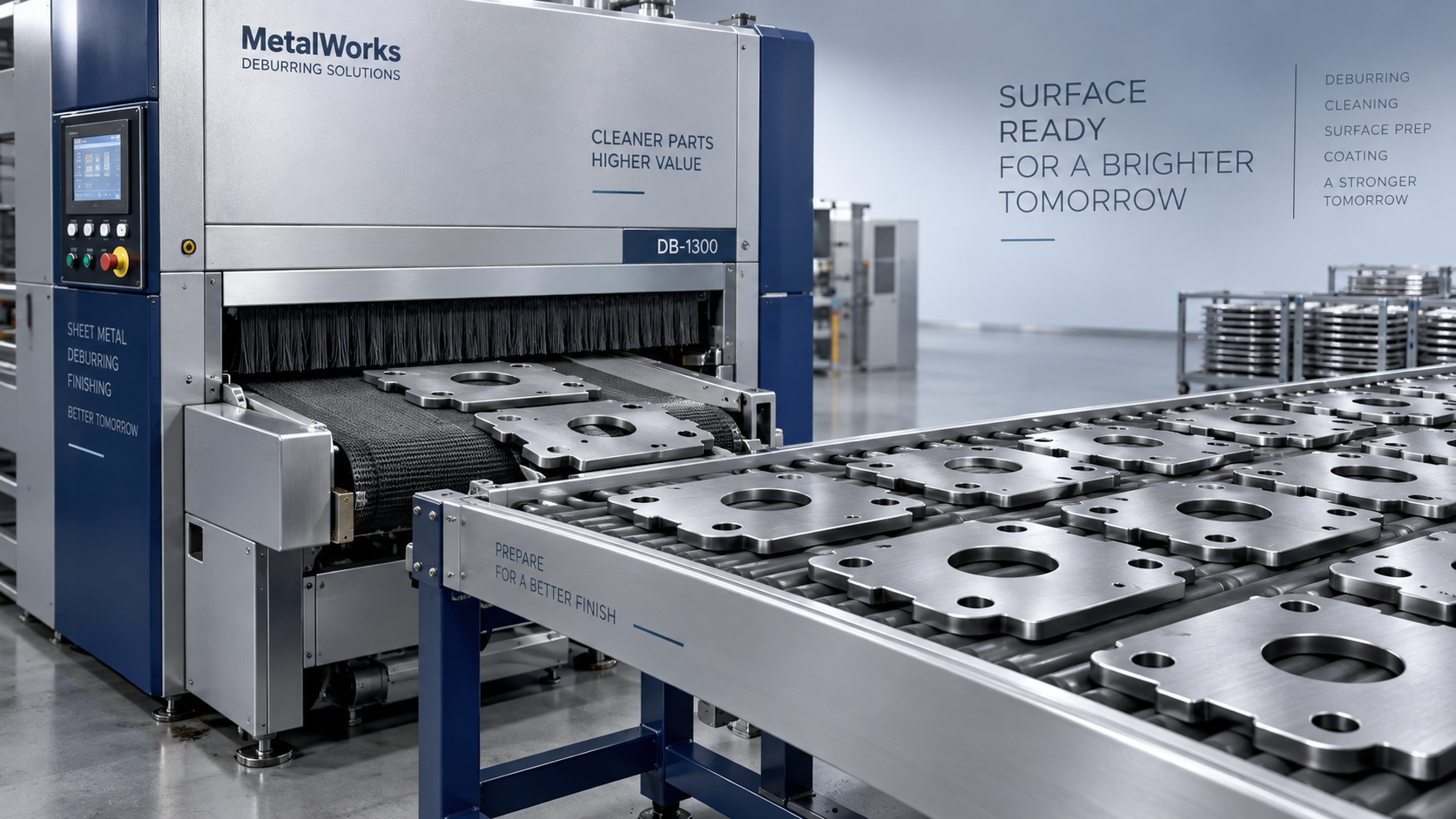
For project managers and engineering leads, Metal Deburring Machines offer a practical way to remove burrs and prepare vulnerable edges for more consistent coating coverage.
The investment makes sense when the process meets coating requirements, protects dimensional tolerances, and handles the actual production mix without creating another bottleneck downstream.
Choosing that process requires balancing material type, part geometry, edge requirements, and throughput. Start with measurable acceptance criteria, then validate equipment using representative production parts.
Will Edge Rounding Solve Your Coating Problem?
Edge rounding can improve coating performance where sharp corners contribute to thin coverage. However, it cannot compensate for contamination, unsuitable pretreatment, or incorrect coating application.
Liquid coatings can pull back from sharp edges during application and curing. Powder coatings also present edge coverage challenges, depending on geometry and application conditions.
A controlled radius reduces the abrupt transition between surfaces, making adequate edge coverage easier to achieve. The required result still depends on the complete coating system.
Before purchasing equipment, identify where failures occur: external edges, internal cutouts, welds, flat surfaces, or trapped recesses. Each location can indicate a different preparation problem.
Review rejected parts with your coating supplier. Determine whether burrs, edge geometry, oxide, surface contamination, or application settings are the main contributors to rework.
If failures concentrate along laser-cut edges, a deburring and rounding trial is justified. If adhesion fails broadly across flat surfaces, investigate cleaning and pretreatment first.
Specify the Finished Edge Before Selecting a Machine
Burr removal and edge rounding are separate outcomes. A part can feel smooth after deburring while retaining a corner too sharp for its coating specification.
Define whether the project requires a burr-free edge, a broken edge, a measurable radius, or a particular surface condition. These requirements demand different processing intensity.
A heavy-duty protective coating specification may require a defined minimum radius. Decorative sheet-metal work may use different criteria, so avoid adopting one universal radius target.
Confirm requirements against the drawing, customer specification, and applicable coating standard. Where references are ambiguous, agree on acceptance criteria with engineering and the coating provider.
Check whether the requirement covers both faces, external contours, internal openings, and accessible hole edges. Machine capability can differ substantially between these locations on one component.
Record features that must remain within tolerance, including slots, tabs, sealing surfaces, and mating edges. Excessive rounding can reduce assembly accuracy even when coating coverage improves.
Match the Machine Configuration to the Work Required
Metal Deburring Machines use different abrasive arrangements, and their functions overlap only partly. Evaluate the entire processing sequence rather than choosing equipment by machine width alone.
Abrasive belts commonly remove protruding burrs and create a directional surface finish. Their performance depends on burr size, abrasive selection, contact pressure, and part support.
Rotary brushes or abrasive discs can round edges from multiple directions. The achievable radius depends on tool design, exposure time, material, and access to each feature.
For difficult parts, a belt may remove the main burr before brushes develop the required edge condition. Confirm that this sequence avoids unnecessary surface removal.
Double-sided equipment can reduce flipping and handling when both faces need treatment. Its value depends on actual requirements, loading efficiency, and the parts it can retain.
Dry and wet machines also differ in utilities, cleaning, maintenance, and material compatibility. Select the configuration only after reviewing the intended metals and required finishing condition.
Use Your Hardest Parts to Test Equipment Capability
A supplier demonstration on large, flat coupons gives limited evidence about production performance. Request trials using parts that represent the constraints of your actual order mix.
Include thin sheets, thick plates, narrow strips, small components, dense internal cutouts, and parts with vulnerable tabs. Each can expose different retention or abrasion limitations.
Small parts may need vacuum hold-down, magnetic retention where applicable, fixtures, or another approved method. Confirm minimum dimensions and permitted shapes for the proposed machine.
Warped sheets and uneven parts can contact tools inconsistently. Ask the supplier to demonstrate stable processing with realistic flatness variation, including parts near your acceptance limits.
Check whether abrasive tools reach internal contours effectively. Deep, narrow features may remain untreated even when external edges achieve a satisfactory radius in one pass.
Also inspect surface appearance and dimensions after processing. A successful trial must deliver acceptable edges without introducing distortion, excessive scratches, or damage to functional features.
Treat Oxide Removal as a Separate Acceptance Requirement
Laser-cut edge condition changes with material, assist gas, thickness, and cutting parameters. These variables affect how much preparation is needed before coating can proceed reliably.
Oxygen-assisted cutting of carbon steel can leave oxide on the cut edge. Depending on the coating specification, that oxide may need removal before finishing.
Nitrogen-assisted cutting generally reduces oxidation, but it does not eliminate every preparation requirement. Burrs, contamination, and local edge irregularities can still require attention before coating.
Do not assume that an acceptable radius proves oxide removal. Inspect the cut face separately and validate the required cleanliness through the agreed coating preparation procedure.
For stainless steel, control contamination from carbon steel particles and shared abrasives. Dedicated tooling or validated cleaning practices may be necessary for the intended service environment.
Aluminum needs appropriate abrasives, cleaning, and dust controls. Discuss material changes with the equipment supplier because a setup suitable for steel may require different operating provisions.
Measure Throughput Across the Whole Process
Published conveyor speed does not equal finished-part throughput. Loading, spacing, flipping, repeated passes, inspection, and unloading determine how many acceptable parts the cell actually produces.
Calculate demand using the laser's output and production mix. A sheet containing many small parts can create more handling work than fewer large components occupying similar area.
Estimate effective cycle time per accepted part, including normal handling and required passes. Use this figure to compare machine capacity with demand during busy production periods.
For example, a machine processing twenty parts per minute provides limited benefit if safe loading restricts the operator to eight. Retention and handling improvements may matter more.
Include changeovers between materials, thicknesses, finishes, and abrasive settings. A mixed production schedule can lose significant capacity even when individual batches move quickly through the machine.
Plan buffers around the cell and identify who handles inspection, cleaning, and transfer. These responsibilities should fit the production schedule without accumulating unprocessed parts near coating.
Build the Business Case Around Accepted Parts
Compare equipment options using cost per accepted part rather than purchase price alone. Include labor, abrasives, utilities, maintenance, floor space, and expected production availability.
Measure current manual deburring time across representative jobs. Record variability between operators, because inconsistent preparation can create additional inspection work and occasional downstream coating failures.
Estimate the cost of edge-related rework using actual records. Stripping, recoating, transport, replacement material, and delayed delivery may cost more than the initial deburring operation.
Keep projected savings tied to demonstrated improvements. Reduced manual handling or fewer rejected coatings are credible benefits only when trials and production records support the assumptions.
A practical payback calculation divides installed investment by verified annual net savings. Include installation, extraction, training, and commissioning, then subtract additional operating costs from projected savings.
For low-volume or irregular work, outsourcing or a smaller machine may provide better economics. Compare options against required lead time, quality control, and available capacity.
Approve the Process With a Coated Production Trial
Evaluate samples after the complete finishing sequence, including cleaning, pretreatment, coating application, and curing. Bare-metal appearance alone cannot establish whether the preparation delivers the intended result.
Agree on how burrs and edge radius will be inspected. Visual checks and touch checks can support screening, but measurable requirements need an appropriate measurement method.
Where specified, assess edge coating thickness using a suitable method. Standard readings on flat areas may not reveal thin coverage at corners or inside cutouts.
Adhesion and corrosion testing should follow the project specification and coating system requirements. Select tests that address intended service conditions rather than relying on generic demonstrations.
Run enough parts to observe consistency as abrasives wear. Record settings, passes, consumable condition, material, and geometry so the supplier's result can be reproduced internally.
Approve the process only when edge quality, dimensional compliance, coating performance, and practical throughput meet agreed criteria. Preserve accepted samples as references for operators and inspectors.
Integrate Deburring Without Losing Control of Quality
Place deburring where it supports the complete manufacturing sequence. Forming, welding, or other operations may create new edges or contamination that require later preparation before coating.
Map which surfaces each operation affects. Some parts can be deburred efficiently while flat, while others need additional attention after fabrication to satisfy the final specification.
Create setup instructions by material and part family, covering abrasive selection, feed settings, passes, and handling. Operators should know which adjustments require engineering or quality approval.
Define checks at startup, after changeovers, and at suitable production intervals. Increase inspection when tool wear, burr variation, or incoming material changes threaten the accepted process.
Set replacement criteria for consumables using quality and productivity evidence. Waiting for obvious tool failure can allow marginal edge preparation to reach coating and cause rework.
Review dust extraction, material compatibility, and housekeeping with the supplier and site specialists. Combustible metal dust requires suitable controls; ordinary collection equipment may be inappropriate.
Make the Purchase Decision From Evidence
The strongest equipment choice is the one that consistently meets your edge and coating requirements across the real production mix, at an acceptable cost per part.
Prioritize demonstrated radius control, reliable part retention, verified preparation quality, and effective throughput. Treat machine speed and advertised versatility as claims that require production evidence.
If trials reveal unresolved coating failures, return to the full preparation and application process. Increasing abrasion alone may raise costs without addressing the underlying cause.
Metal Deburring Machines deliver their greatest value when measurable edge preparation becomes a repeatable production step, reducing manual variation and helping teams avoid preventable coating rework.